What gets checked
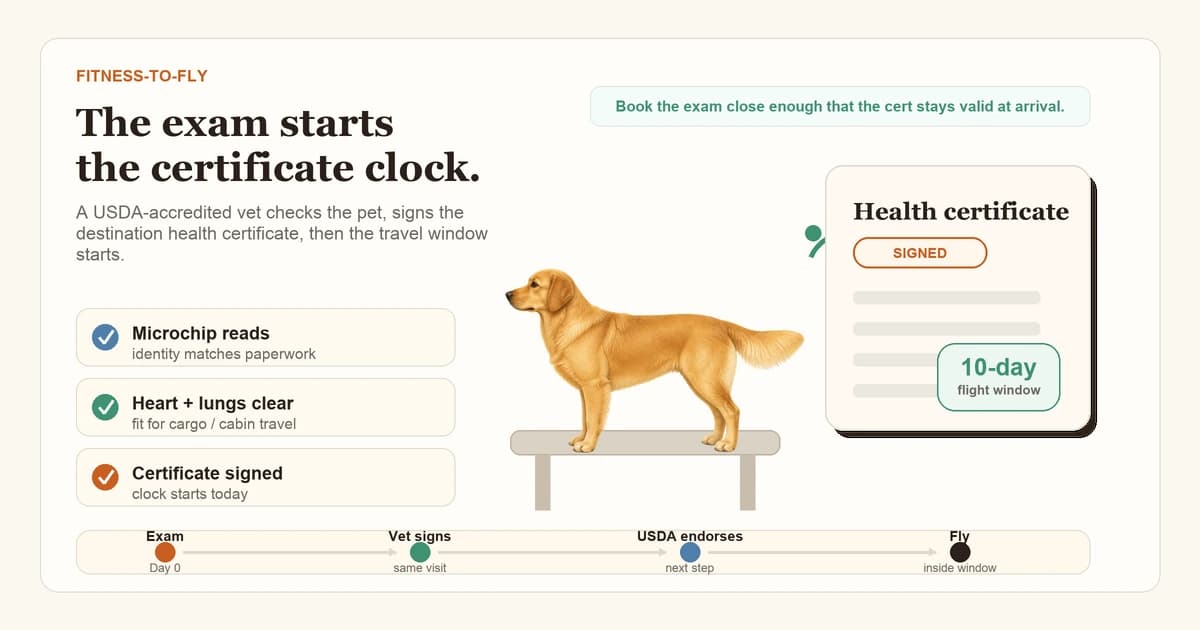
The exam isn’t long — usually 20–40 minutes — but the checklist is specific. A USDA-accredited vet will:
- Scan the microchip to confirm it reads at airport scanners. Non-ISO chips can fail here.
- Cross-check the microchip number against rabies certificate, FAVN report (if applicable), import permit (if applicable).
- Auscultate heart and lungs to confirm no underlying cardio-respiratory issues that get worse at altitude or in cargo conditions.
- Check for dehydration, fever, visible infection — anything that suggests acute illness.
- Examine for parasites — fleas, ticks, ear mites. Some destinations require visible-parasite-free certification.
- For brachycephalic breeds, an additional Fit-to-Fly assessment for breathing capacity at the airline’s request.
- Confirm crate fit — vet may ask the dimensions of your IATA crate to confirm the pet has the legally required standing / turning / lying room.
If everything checks out, the vet signs the international health certificate (the destination-specific form — UK cert, EU AHC, Japan cert, etc.).
Why “USDA-accredited” matters
Most US veterinarians are licensed by their state but NOT USDA-accredited. USDA accreditation is a separate federal credential a vet earns through APHIS training. Only USDA-accredited vets can legally sign international health certificates for outbound travel.
If you walk into your usual neighbourhood vet without checking, there’s a real chance they can’t help with international paperwork. The exam they do is medically the same — but their signature won’t be accepted by USDA APHIS for endorsement.
Pawvisa maintains a registry of every USDA-accredited clinic in California — search it free by ZIP. The $29 readiness analysis shortlists the subset most likely to handle your specific destination.
The timing window — when to book
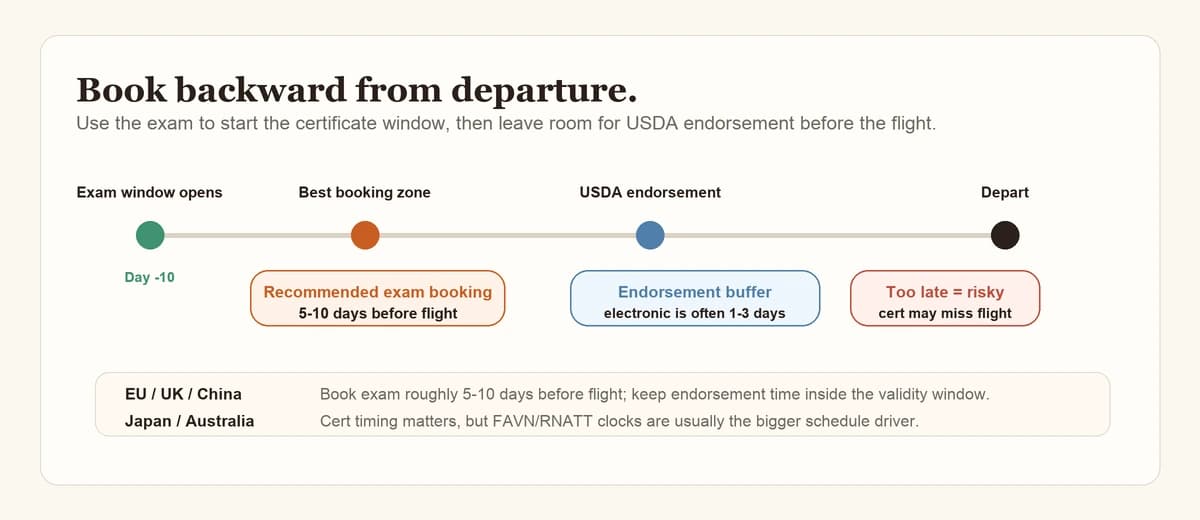
For most destinations, the exam happens within 10 days of your scheduled flight. The cert validity window (see our validity-windows article) drives this.
Practical booking advice:
- EU / UK / China: book the exam 5–10 days before flight. Closer to flight = less buffer if anything fails the exam, but the cert’s still valid on arrival.
- Japan / Australia: cert timing matters less than the FAVN/RNATT clock; book the exam ~7 days before flight.
- Mexico: no health cert required since 2019, but a fitness-to-fly check is still recommended for cargo flights.
Most USDA-accredited vets book 1–2 weeks out for these appointments. Don’t try to walk in the day before your flight — it almost never works.
What can fail the exam (and what to do)
Five things commonly fail or delay the cert:
- Microchip won’t read.Old non-ISO chips, or chips implanted too deep, sometimes don’t scan reliably. The vet may have to re-chip with a new ISO chip — restarting some destination clocks.
- Visible illness. Vomiting, diarrhea, ear infection, eye discharge. Most vets postpone the exam by 1–2 weeks and treat. Critical if your flight is close.
- Dental issues. Some destinations flag visible dental disease as a fitness concern. Usually a treat-and-recheck.
- Pregnant or nursing.Most airlines refuse pregnant or nursing animals in cargo. Vet won’t sign for flight; reschedule after weaning.
- Recently sedated or anesthetised. Pets that had anaesthesia within 24–48 hours of exam usually need to wait. Airlines also refuse sedated pets in cargo.
If any of these come up: the exam doesn’t fail outright, it just gets rescheduled. The risk is your flight booking is fixed and the cert isn’t ready in time. Build at least 1 week of buffer between exam and flight in case re-exam is needed.
What to bring to the appointment
- Your dog or cat (obvious but worth saying)
- Original microchip implantation record with the chip number
- Original rabies vaccine certificate with chip number, vaccine details, vet signature
- FAVN / RNATT result (if your destination requires it — Japan, Australia, Hawaii, Korea, Taiwan direct)
- Import permit (if your destination issues one — Australia BICON, Taiwan APHIA, or a conditional China GACC category)
- The completed destination-specific health certificate form (some vets prepare this themselves; others want you to bring a blank — call ahead)
- Your travel itinerary (flight date, airline, arrival airport)
Bring originals, not copies. The vet’s cert is built on these source documents.
After the exam: USDA endorsement
The vet’s signed cert goes to USDA APHIS for federal endorsement. Two paths:
- Electronic (VEHCS): most destinations, 1–3 business days turnaround. UK is electronic for non-commercial.
- Ink endorsement: required by some destinations (UK commercial, some Asia/Middle East). Mail the original cert to APHIS regional office; longer turnaround.
You can do this yourself (the vet hands you the signed cert and you submit) or many USDA-accredited vets will submit it for you for a fee. See our USDA endorsement turnaround article for the process detail.
Cost expectations (without inventing numbers)
USDA-accredited vet exam + cert preparation fees vary widely in LA. We don’t publish specific numbers here pending the pricing data brief results. Pawvisa’s $29 readiness analysis includes current verified ranges for your specific destination and route.
In general: expect the fitness-to-fly exam + paperwork to be one of the larger line items in your pet move, second only to cargo airline rates.