What “brachycephalic” actually means
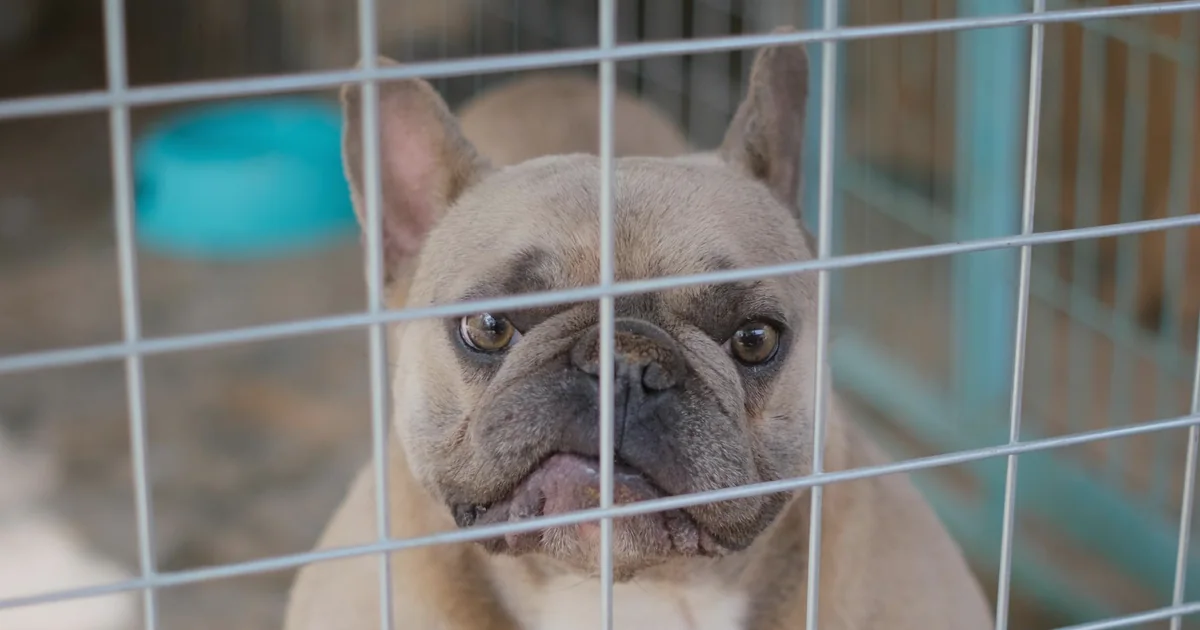
Brachycephalic is the medical term for “short-skulled.” These breeds have a compressed upper jaw, narrower nasal passages, and softer palates than typical for their species. In normal conditions they breathe fine. Under heat stress, restricted airflow, or excitement, they can struggle. Cargo hold conditions — variable temperature, pressure changes during takeoff and landing, hours of unattended transit — stack all three.
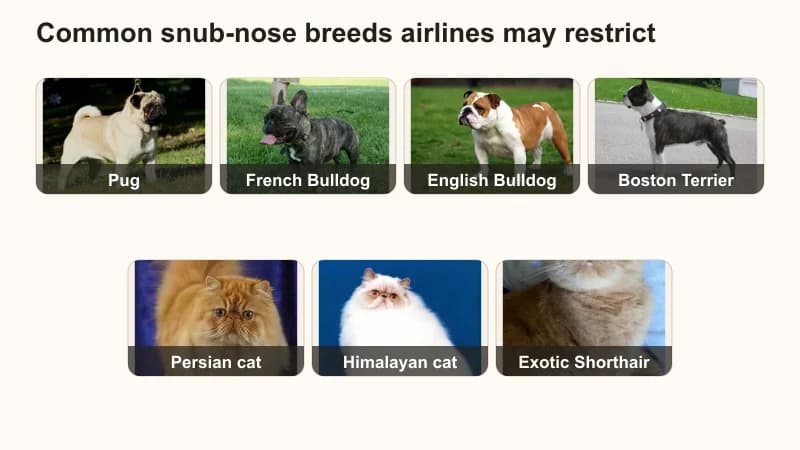
Dogs commonly classified as brachycephalic
- Pug
- French Bulldog
- English Bulldog
- Boston Terrier
- Cavalier King Charles Spaniel (some carriers)
- Pekingese
- Boxer (mild)
- Shih Tzu
- Lhasa Apso
- Bull Mastiff
- Cane Corso and other Mastiff types (mild)
- Brussels Griffon
Cats commonly classified as brachycephalic
- Persian
- Himalayan
- Exotic Shorthair
- British Shorthair (mild)
- Burmese (mild)
- Scottish Fold (mild)
The “mild” cases are sometimes accepted by carriers that refuse the pronounced cases. There’s no universal industry list — each airline maintains its own.
Why airlines refuse them — it’s operational, not regulatory
There’s no government rule that says “no Pugs in cargo.” Airlines refuse them by their own policy, for two reasons:
- Liability. Brachycephalic pets have a documented higher mortality rate in air cargo. The IPATA-published incident statistics over the past decade are uneven across breeds; brachycephalic dogs are disproportionately represented. Airlines that book a Frenchie in cargo and have it die en route face owner lawsuits, PR damage, and operational review. The simpler path is to refuse the booking.
- Cargo-hold conditions.Even modern wide-body aircraft have temperature swings in the cargo hold. Ground operations — taxi, loading on a hot tarmac, summer afternoon transfers — push the high end. A healthy Labrador handles a 38°C tarmac wait; a French Bulldog often doesn’t.
The seasonal layer
Many carriers add a temperature embargo on top of the brachycephalic policy. The pattern (varies by airline; verify before booking):
- May to September, most US carriers restrict live-animal cargo when ground temperatures at any airport on the routing exceed a threshold (often around 29°C / 85°F).
- For brachycephalic breeds, the threshold may be lower, or the embargo can apply year-round regardless of temperature.
- Embargo applies route-by-route: a LAX→NRT flight may be fine in December, restricted in July.
What to ask your specific airline
Because policies shift and we don’t have a current verified comprehensive list, the only honest move is to call your specific airline’s cargo department (not passenger reservations) before you commit to the booking. Questions worth asking:
- “Do you accept [breed] in live-animal cargo?” Be specific about the breed — “Pug” not “small dog.” Confirm in writing if possible.
- “Does your snub-nose policy change seasonally?” Get the exact months and the threshold.
- “Are there alternative routings you allow for this breed?” Some carriers permit summer-restricted breeds via cooler-routing hubs (e.g. Lufthansa via Frankfurt Animal Lounge at night).
- “Is there a vet acclimatisation certificate I can provide?” A few carriers accept a USDA-accredited vet’s written certification that the pet tolerates higher temperatures. Not all do.
If your airline says no, you have three options:
- Try another carrier on the same route. Restrictions vary — Lufthansa Cargo has historically been more open to brachycephalic than some US passenger-airline cargo divisions.
- Change the route. Multi-stop via a cooler hub, or different season.
- Charter or pet-relocation specialist. Some specialised pet relocators have dedicated brachycephalic-friendly aircraft or charters. Higher cost.
Why we don’t publish a carrier-by-carrier table
Airline policies on brachycephalic breeds shift more often than most regulatory rules. Suspensions get added and lifted; a carrier accepting Pugs to Frankfurt in March can refuse them by June; new aircraft on a route can re-open booking that was closed the year before. Anything we publish here as “the current list” would be partially stale by the time you read it — and stale airline rules send people to airports with a kennel and no booking.
We’d rather give you the things that don’t go stale (the breed list, the operational reasons, the right questions to ask cargo agents) and route you to a current check for the carrier-specific part.
For the route you’re actually flying, our $29 readiness analysisincludes a recent verification of the cargo carriers most commonly used on that route, so you don’t have to call five airline cargo lines yourself. We update those as policies move.
A note on the destination side
The destination country’s import rules don’t usually mention brachycephalic breeds — entry depends on rabies, microchip, FAVN, etc., not on skull shape. The airline restriction is the bottleneck. If a UK move requires Pug-in-cargo and three carriers refuse, the entry rules don’t matter because the dog can’t legally fly.
This is one of those edge cases where the operational bottleneck (airline policy) is harder than the regulatory bottleneck (destination paperwork). Build the airline conversation into your timeline early, not the week before flight.